
Today, as I head into a new week, I am trying to finalize the new edit of my novelette, Regret. When I first released this little book, my first actual published (self-published) work of fiction after 30 years of writing fiction, I published it without fanfare. In some ways, I wanted zero attention on it. For one, I was suffering from severe imposter syndrome. For two, I was not satisfied with how quickly I wrote it, and I kind of hid behind the excuse that I did this out of a promise to myself and to the readers of my nonfiction book about how to write story, since I used it for illustrative examples.
I certainly did not announce its release on any social media, and only a handful of the family members in my house even knew about it. Obviously, I kept my name on the book and allowed people to accidentally stumble upon it if they decided to Google my name, though apparently I have not inspired enough curiosity in the people in my community to gain haphazard attention either. That was all fine with me. For a while, I considered delisting it, completely rewriting it, or burying it in a larger volume of stories.
As I explained to my last blog post, I decided to give the little book another shot at literary life, and rewrote most of it, barely leaving a single word of it untouched. Presently, I now feel like I am close to having a product that stands on its own as a work of fiction independent of the writing exercises that it originated from (soon available on Amazon on other platforms). It is the best version of itself and is only limited by my current growth as a writer. So I'm ready to put it out there and use some actual marketing strategies.
But one thing my co-publisher and I have agreed on from the very start is that we are artists, not marketers. That is perhaps, no, it is definitely our biggest weakness as authors. It does not take much research to discover on the Internet that even if you score a traditional publishing deal, a publisher is going to kind of hang you out to dry after the initial release. Most of your sales, in terms of longevity, are going to be the result of your own marketing efforts, or of your already built-in audience based on your current social media footprint. So I would be lying if I said this very blog post wasn't part of that marketing strategy to create awareness for my book and of myself as an author—though it feels both unnatural and manipulative, like a violation of the story's authenticity.
But I do know it's something I need to get over in order to actually make progress as a writer by profession. And I suppose blogging is at least a more natural and authentic aspect of marketing that has its own integrity.
My co-publisher and I have spent a lot of time both researching the marketing of self-published books and discussing it on podcasts, so it's not like I don't have any idea what I'm doing. But for every marketing strategy, there are more failures than successes, and I don't have the budget to spend a lot of money on Facebook or Amazon ads, though I think ads are an important part of marketing, because every one of us can say that we own or have purchased digital products or books simply based on ads we've seen on our phones, computers, or TV.
In short, despite my inhibitions, anxieties, fear, and perhaps even pride, I am going to be marketing this little self-published book in a very direct way to see exactly what comes of it and what works. What’s the worst that can happen?
Each Stitch Matters
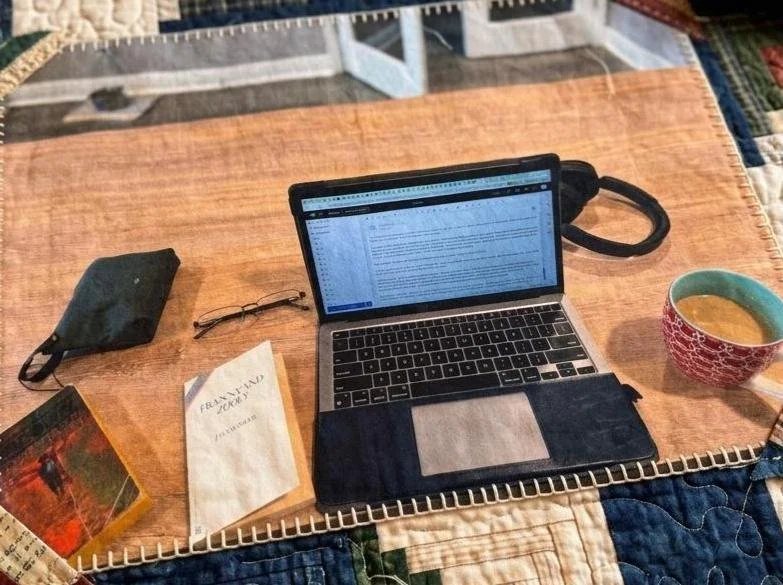
How do you live as a writer when you are fifty years old, have a demanding job that steals your energy and time, a wife and four kids living at home, and four pets?
At this point, the only thing I can say is you just do what you can with the time you have. For example, this weekend I had to supervise the homecoming game and dance at my school Friday and Saturday night. That left only Sunday morning—a short morning before the family wakes up and before church. After two cups of coffee, a short walk, and devotions, I tackled the line editing of my self-published Regret. Yes, it’s already published… so here’s the story of why I’m still editing it.
Regret started out as a writing exercise meant to illustrate writing techniques in my first self-published book, a how-to book about writing fiction. After writing several sample passages illustrating characterization, I decided to commit to turning my passages into a short story. Well, the short story ballooned from 5,000 words to over 15,000 words, officially a novelette (since it is under 20,000 words). When I published it, I also had it narrated by a multicast AI narrating website called Spoken. It immediately earned strong reviews and many listens. However, I didn't view this novelette (that I published on KDP) as anything more than a writing experiment to go along with my writing book. I left it alone for a while on Amazon for fun. It sold less than fifty copies, while I turned my attention writing and self-publishing two western books with my father (Jerry Allan Hietala) under a different alias, and then proceeded to edit and publish two books written by my late father-in-law (Dr. Don Brendtro). Afterward, I returned to Regret because I, indeed, had several regrets about it.
The great part about self-publishing through Amazon's self-publishing service KDP is that you can update your manuscript any time you want without fees. After sitting untouched for a year and a half, I could finally bring a fresh perspective to the book. Though it's only garnered 9 reviews on Amazon, I did get some negative feedback in two areas that I took to heart. One is the underdevelopment of the characters. In my rewrite, I fleshed out the tragic protagonist through internal monologue and a completely new chapter, adding a character that was previously only mentioned through dialogue (the protagonist's best friend and foil). My biggest backlash, however, was the ending. Not only was it vague, but it was too sadistic and garnered at least one hateful review as a result. When I returned to the story, I realized that the tragic fall of the main character was always going to be dark, but I didn't need to leave the other characters in such a dark, unresolved place to make my thematic point. It now ends in a far more satisfying way (at least for me) and it gave me a chance to end with a final chapter that 'rhymes' with the beginning of the book.
By this past weekend, my big rewrite and editing was complete. Next up: the incredibly monotonous task of line editing—literally analyzing each sentence's success (or failure) to move the story forward.
And of course, any change that I make requires proofreading again. For this task, I use editGPT. Don't get upset if you're a purist when it comes to human writing. This book was not written or rewritten by AI, but proofreading for syntax, grammar, misspellings, misused homonyms, and just silly mistakes requires talent—or computer assistance. As a self-publisher, AI proofreading makes my job possible, even though I don't accept every suggested change when I’m going for a particular effect. AI certainly does not replace the need to line edit. And no AI bot will ever determine the fate of a sentence in the universe of my story.
What does determine the quality of each sentence is what Hemingway called an 'internal crap detector' (that certainly can be educated and improved over time). And it's something that you either have or you don't. A real writer is an artist and can just feel when a line or word hits wrong. Let's take the ending of this third chapter in my book, Regret. I wanted the protagonist's friend to challenge his spiritual awakening and leave the door open for a return to his failed state as a human being. What follows is a brief synopsis of my third chapter and my previous attempt at ending it:
In this chapter, Clint has been miraculously rescued on a mountain by what he suspects is an angel after promising God, just before falling to his death, that he would change his ways if he was saved. Clint is so convicted afterwards that he translates his promise of redemption into a list of personal commandments. In my newly added third chapter, Clint attempts to explain his epiphany to his cynical friend, and also change the dynamics of their friendship:
"For a single moment on that mountain ledge," Clint said after the waitress left them alone, "all of the deception of my life fell away. Just for a moment I could see my life clearly. There's no coming back from that. I can't unsee my mistakes and the only thing left to do is make some real changes to my life."
"What's that supposed to mean?"
"It means I'm pausing my nightlife. Drinking, women, all of it. I need to figure things out. I'm going to spend time with my daughter any chance I get. That makes sense, right?"
Ron breathed in through his nose, the oxygen lifting his chest before collapsing in a sigh. He hoped Ron wasn't about to accuse him of naiveté or, worse, hypocrisy. Above every sin in life, Ron despised hypocrisy. "Maybe,” said Ron. “Whatever. I'm your friend, not your spouse. I'm here for you. And I'll be here for you when you get through this phase. I'm just glad you're alive. You're not dead! That's worth a toast!"
Ron lifted his coffee cup.
"Here's to miracles!" said Ron, sarcasm rebutting his words.
After their toast, Ron set down his cup without drinking and stared at his hands for a moment. Ron often inspected his cuticles when lost in thought.
"Maybe you're right," said Ron, pointing his uncalloused finger at Clint. "Maybe it's time to live healthier, to be more self-controlled. But just because you survived death doesn't mean you should miss out on life. Do you understand what I'm saying? Of course you can improve yourself. But let's not deceive ourselves—you're no monk."
Clint couldn't disagree, and so left the remark unchallenged.
But this ending sentence felt flat. It didn't sit right with me even after multiple edits and drafts. So on this Sunday, exhausted and unmotivated, I revised it for a more thematic chapter ending:
Clint didn't need to be a monk or any kind of religious zealot. He just needed to stick to his list—the kind of simple priorities and restrictions millions of men across the world followed with little more than the occasional nudge from their conscience.
Usually, I try to say more with fewer words. And perhaps this paragraph is on the heavy-handed side. But I needed to communicate clearly that this conversation with the protagonist's friend, though it was supposed to help him clarify his new perspective on life, left him unsettled about his future.
Now that this chapter ending is close enough, I will wake up at four thirty in the morning tomorrow before work and continue reading through the next chapter, line by line.
If you are a writer like me who is attempting to turn their hobby into both a craft and a profession, tasks like line editing—when you are doing the actual composition without the use of AI—will inevitably tempt you to become distracted or procrastinate. Or worse, accept mediocrity and messiness. But your manuscript deserves to have each scene, each paragraph, and sentence play off each other like a melody while communicating your theme as implicitly and artistically as possible. You can't afford to have it all come undone by a single sentence that either hits the wrong note or just doesn't belong. And when you are trying to build an audience, all it takes is one poorly written or mismatched sentence or paragraph to lose a reader forever. Writing is called a craft for a reason. Each stitch matters.
C.S. Lewis - An Inspiration to my Life as a Writer…and a Man
Drawing inspiration to the work of fantasy writer C.S. Lewis.
Daniel Hietala
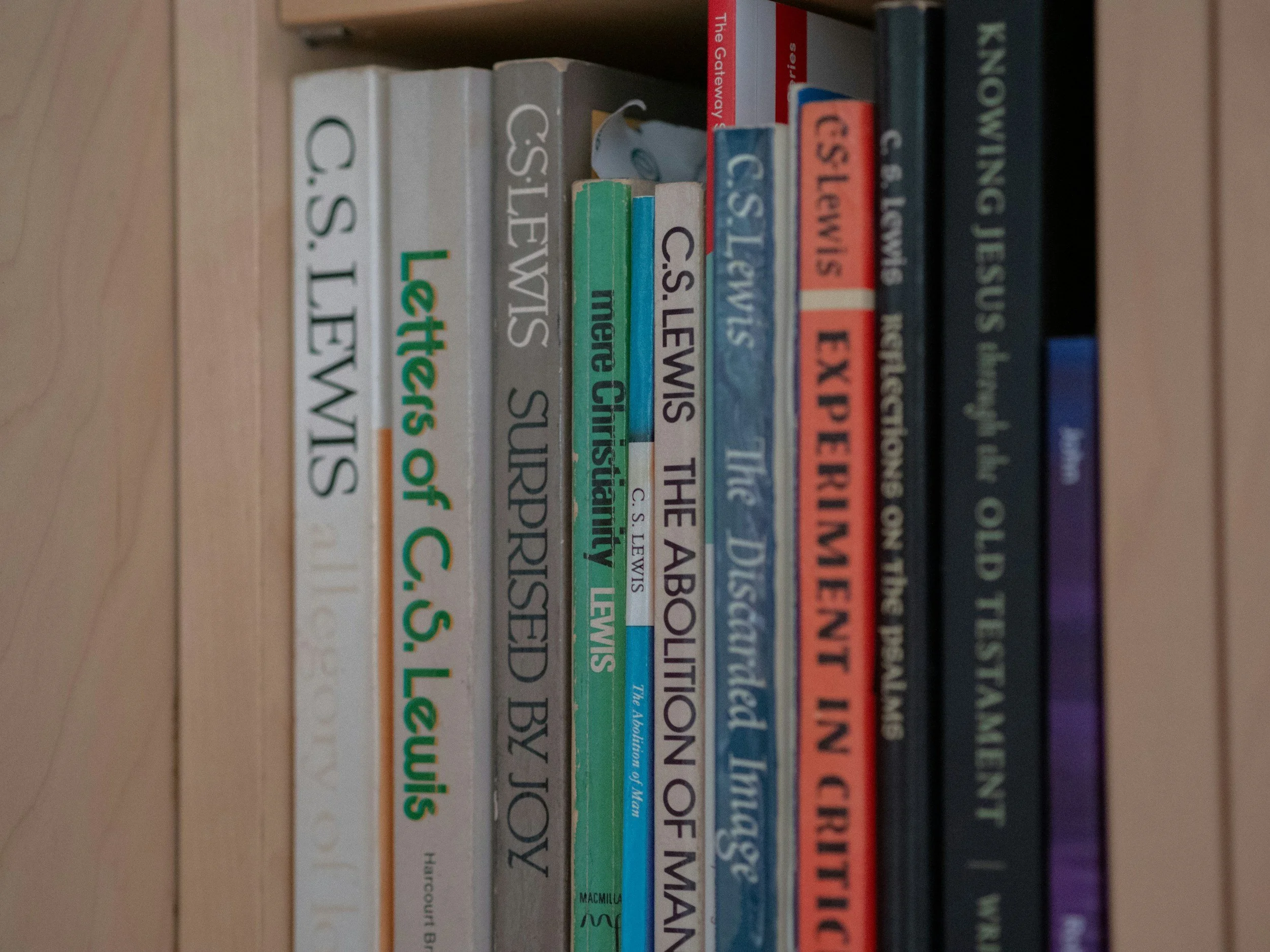
C.S. Lewis was my gateway drug to reading—and the spark that ignited my hunger to write.
The fact that Lewis was a Christian, that his Narnia series brimmed with biblical allegory, seemed almost too good to be true. Growing up in a Christian home where my identity in Christ formed early, I had few cultural or literary heroes outside pure theology and church history. Lewis's Narnia books revealed something startling: I actually enjoyed reading.

This was quite the discovery for a preteen navigating a tumultuous, if memorable and character-building, childhood. There was little structured space—or even thought—for reading beyond the Bible. Books were library things, school things, adult obligations I had to endure. I struggled with reading comprehension, plodded through pages slowly, and had the attention span of—well, someone extremely ADD.
Then came sixth grade and those dreaded monthly book reports. No avoiding the monotonous task now. That's when the door opened to true magic.
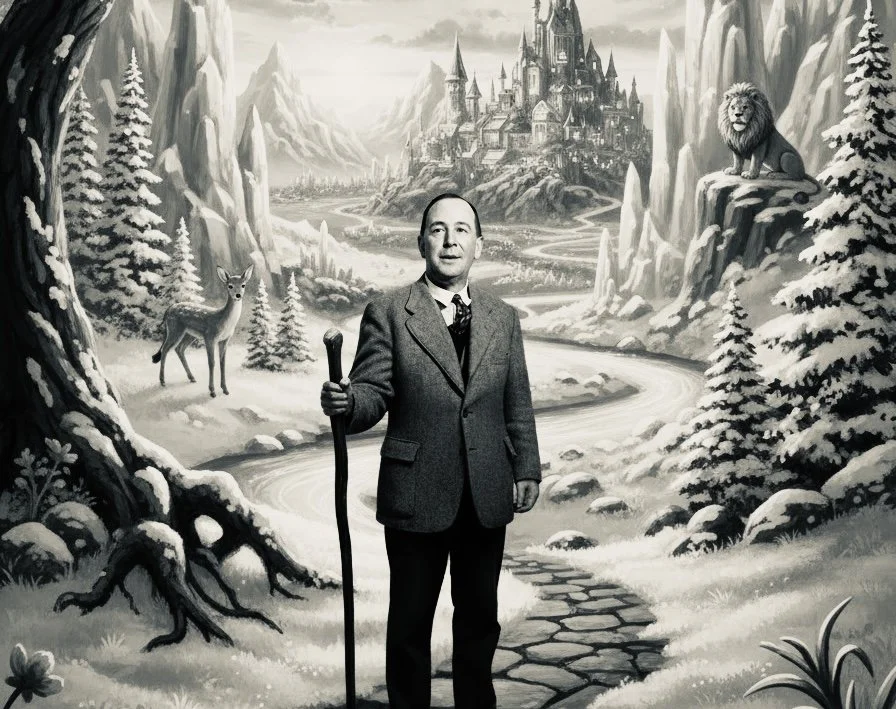
A magic built through humorously insightful descriptions of children discovering mythical worlds. Creatures behaving in the most heroic or devious ways. A distorted but true looking glass of our actual world. I devoured the Narnian adventures and eagerly moved to his more verbose sci-fi trilogy, starting with Out of the Silent Planet.

The impact an author can have on you as a human being is quite amazing. Just as I grew out of children's stories (though I've re-read Narnia multiple times as an adult with nearly equal pleasure), I grew into his nonfiction works that exposed the "mere" logic of Christianity against the secular perspective on Truth. His books calcified my faith and provided one of the main anchors that helped me weather the assault of college—where books and professors, even unintentionally, have a way of making your values feel childish and insignificant.

No, Lewis was just as brilliant as any academic who ever lived. But his imagination and unapologetic pleasure in poking holes in secular academia made him a literary and philosophical giant. What grounded him, though, was his authentically pious Christian attitude—his kindness and grace toward his fellow man.
I can honestly say I wouldn't be the person, writer, believer, professional, father, or man I am today without an author named Clive Staples Lewis.